External SSD or Hard Drive: Which to Buy for What
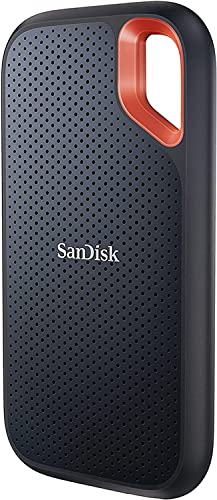
External storage is one of the few remaining categories where the older technology is still clearly the right answer for some uses. The decision is not about which is better but about which failure mode you can live with.
The practical differences
| External SSD | External HDD | |
|---|---|---|
| Speed | 400–1000+ MB/s | 80–160 MB/s |
| Cost per TB | Roughly three to four times higher | Lowest available |
| Moving parts | None | Spinning platter, moving head |
| Survives a drop while running | Usually | Often not |
| Size and weight | Pocketable, often under 60g | Palm-sized, 150–250g |
| Noise and heat | Silent; warm under load | Audible; cooler |
| Failure style | Often sudden and total | Often gradual, with warning noises |
The drop test decides most of it
A spinning hard drive has a read head floating microns above a platter turning at 5400rpm. A knock while it is running can put the two in contact. This is the dominant real-world cause of external drive failure, and it is why a drive that lives in a bag should be an SSD.
A drive that sits on a desk and is not moved does not face that risk, and the cost advantage of a hard drive becomes decisive — for bulk backup, four terabytes of HDD costs what one terabyte of SSD does.
Simple rule
- It travels → SSD
- It sits on a desk holding backups → HDD
- You edit video or work off it directly → SSD, and check the interface speed
- Archive you rarely touch → HDD, and keep two copies
Speed claims and the interface
An SSD's advertised speed is reachable only if everything in the chain supports it — the drive, the enclosure, the cable, and the port on your computer. A 1000 MB/s drive connected through a USB 2.0 cable delivers about 40 MB/s.
Check the drive's stated interface (USB 3.2 Gen 2 for 10Gbps, USB4 or Thunderbolt for more), make sure your computer has a matching port, and use a cable rated for that data speed — see choosing a USB-C cable. Charging cables are usually USB 2.0 for data and will silently throttle the drive.
SSD types, briefly
Portable SSDs come in two internal flavours. Cheaper ones use a SATA drive in a USB enclosure and top out around 500 MB/s. Faster ones use NVMe and reach 1000 MB/s or beyond over a 10Gbps connection. For most people the difference is invisible; for large file transfers it halves the wait.
Sustained writes are worth knowing about. Many drives write quickly into a fast cache and then slow substantially once it fills. If you routinely move files larger than about 50GB, look for a sustained-write figure rather than the peak.
Neither is a backup on its own
This matters more than the choice between them. A single external drive is one device away from total loss, and both types fail — SSDs typically without warning, hard drives often with clicking or slow reads first.
Keep two copies on different devices, and if the data is irreplaceable, one copy somewhere else physically. For family photos and documents, an inexpensive second hard drive stored at another address is worth more than any single expensive drive.
Practical checks before buying
- Included cable and its ends. Many ship USB-C to USB-C only; check what your machine has.
- Warranty length, and whether the seller handles claims locally.
- Hardware encryption, if the drive will carry anything sensitive and might be lost.
- Format. Drives often arrive formatted for one operating system. Reformatting is easy but erases the drive — do it before putting anything on.